










Migraines are far more than just an ordinary headache. They deeply impact daily life, robbing concentration and energy, and can throw entire days off balance. Many sufferers are all too familiar with the often arduous search for triggers. Stress, hormonal changes, lack of sleep, or certain foods are usually the focus of attention.
What is often overlooked is that the oral cavity can also play a crucial role in migraines and recurring headaches. Teeth, jaw muscles, and gums are closely connected to nerve pathways and muscle chains in the head and neck. Even small, insidious changes such as unnoticed jaw tension, nighttime teeth grinding, or inflammatory processes in the mouth can exacerbate existing symptoms or trigger migraine attacks.
In this article, we explain the connections between dental health and migraines , why problems in the oral cavity can make headaches more intense, and how you can specifically support your dental care and oral health to reduce additional strain on the head and jaw.
The mouth as part of a complex nervous system
The jaw is one of the most stressed areas of the body. It is constantly in motion, during speaking, chewing, and unconscious tensing, and is closely connected to muscles, nerve pathways, and the entire head and neck area. Even minor disturbances in this sensitive system can therefore have far-reaching consequences.
Inflammation of the gums, untreated dental problems, or chronically tense jaw muscles continuously send stimuli to the nervous system. These signals are transmitted via complex nerve connections and can influence pain processing in the brain. In people who are already prone to headaches or migraines, this additional stimuli can exacerbate existing symptoms or trigger attacks.
What makes this particularly challenging is that many of these processes go unnoticed for a long time. The body becomes accustomed to a certain level of tension in the jaw or to minor discomfort in the oral cavity without consciously perceiving it as a problem. However, it is precisely these subliminal stresses that can contribute to the nervous system remaining chronically overstimulated, leading to more frequent or intense headaches.
Bad teeth as a silent stress factor
Not every change in the oral cavity immediately manifests as noticeable toothache. Many problems develop gradually. Slight gum bleeding, sensitive tooth necks, a diffuse feeling of pressure in the jaw, or a subtle feeling of tension are often ignored or dismissed as insignificant in everyday life.
For the nervous system, however, this constant source of stimulation represents a continuous strain. The body remains in a state of silent alert, even if the trigger is not consciously perceived. In people with migraines or chronic headaches, this very subliminal, constant irritation can lead to their individual stress threshold being reached more quickly, resulting in more frequent or intense attacks.
The gums play a particularly important role in this. Inflammatory processes in the oral cavity release messenger substances that are not localized but can affect the entire body via the bloodstream. These inflammatory signals are increasingly the focus of research, as they promote systemic inflammatory responses and are discussed as a possible trigger for migraines. Therefore, good oral health is not just a matter of beautiful teeth, but an important building block for a calmer, less overstimulated nervous system.
Teeth grinding and jaw tension as migraine triggers
Many people with migraines unconsciously clench or grind their teeth. This often happens at night or during stressful periods. The problem is that this tension is rarely consciously perceived. The jaw works under constant stress for hours, the muscles harden, and even during periods of rest, they find little relief.
The effects often become apparent immediately after waking up:
- Headache in the morning
- Pressure in the temple area
- tense neck and shoulder muscles
- a pulling or tingling sensation in the face
These symptoms rarely remain isolated. They can intensify throughout the day and develop directly into a migraine attack or significantly increase its intensity .
Especially in winter, and particularly in January and February, several contributing factors coincide. Less daylight, inner exhaustion, and persistent stress further promote unconscious teeth clenching. At the same time, nighttime regeneration is impaired. For migraine sufferers, this creates an unfavorable combination of muscular strain, nervous sensitivity, and lack of relaxation, which can exacerbate headaches in the long term.
Why gentle dental care is so important for migraine sufferers
When the jaw muscles and nervous system are under constant tension, the body needs one thing above all: relief, not additional stimuli. Especially with migraines and recurring headaches, daily dental care plays a more significant role than many realize. This is because any mechanical stress in the oral cavity directly affects the jaw, muscles, and nerve pathways .
Traditional tooth brushing with strong pressure or rapid movements can unconsciously create additional tension in the jaw. This is especially true in the evening, when the body should be winding down, as it keeps the muscles activated. For people with migraines, this can mean that existing tension is further intensified and nighttime regeneration is impaired.
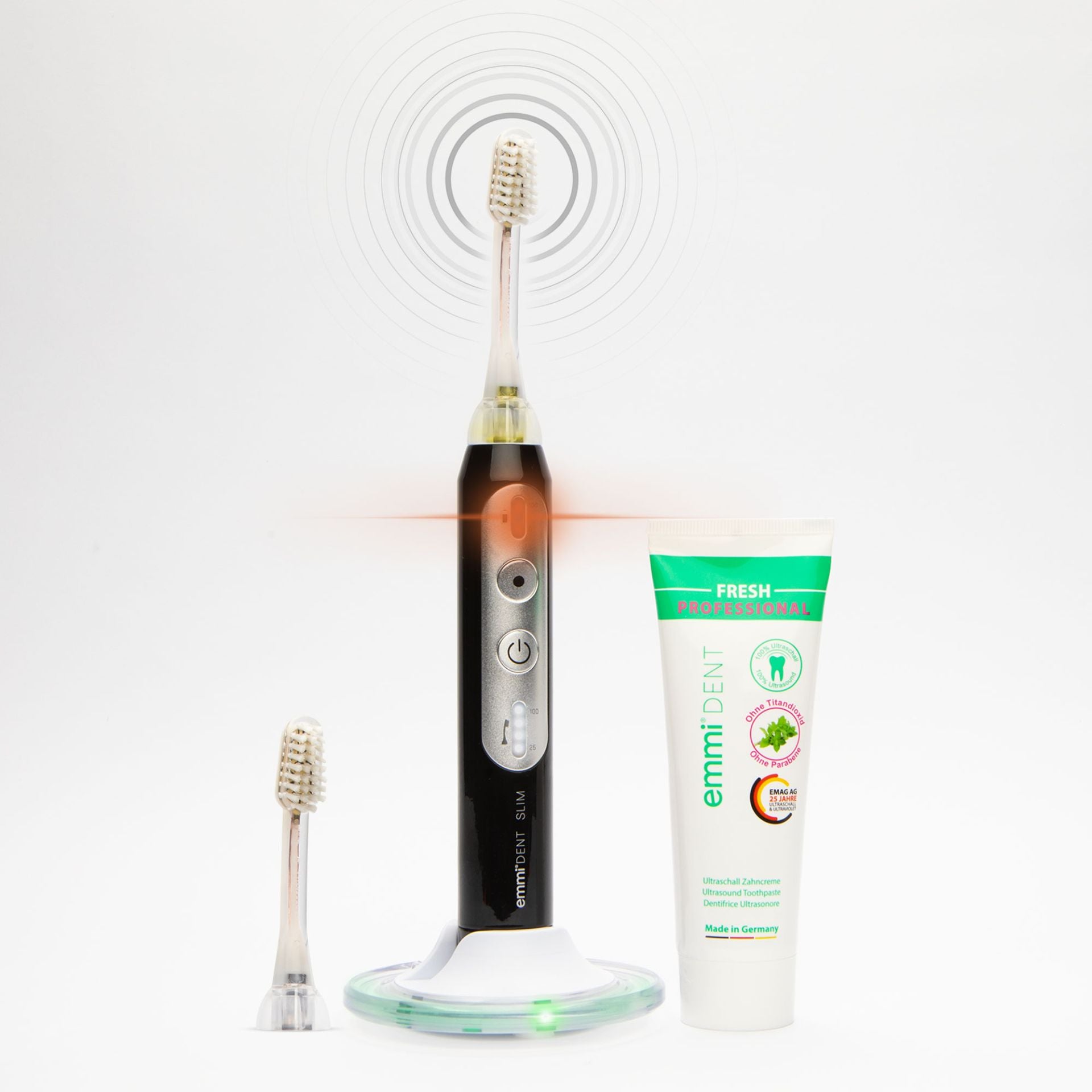
Gentle, low-pressure dental care, like that offered by our emmi-dent ultrasonic toothbrush , addresses this very issue. It cleans thoroughly without requiring active jaw movement. The oral cavity is nourished while the muscles remain relaxed. The nervous system receives fewer stimuli and can more easily enter a calmer state.
Many migraine sufferers report that a relaxed evening dental care routine helps them consciously release tension. Not as a therapy, but as a supportive component of an overall less stimulating daily life. Especially during stressful winter months, this form of care can help prevent further strain on the head, jaw, and neck, giving the body the rest it desperately needs.
Dental care as part of migraine prevention
Migraines are rarely caused by a single trigger. They are usually the result of many factors interacting and overloading the nervous system. Besides stress, lack of sleep, or hormonal changes, the oral cavity can also play a role. Dental care is often underestimated in this context , even though it has a direct, daily impact on the jaw, muscles, and nerve processing.
A conscious dental care routine can help reduce additional stress. Gentle care relieves pressure on the jaw, avoids unnecessary muscle activity, and supports a smoother transition into the recovery phase. Especially with migraines, it is helpful to minimize all avoidable stimuli in everyday life and give the body as many relaxing signals as possible.
Oral hygiene is not a substitute for medical treatment of migraines. However, it can be a stabilizing factor in keeping the oral cavity free of inflammatory stimuli and preventing further exacerbation of nighttime jaw tension. The calmer the oral cavity, the fewer additional signals the nervous system has to process.
In a holistic approach to migraine prevention, it is therefore worthwhile to consciously consider dental health as well. Small adjustments to daily care can contribute in the long term to relieving stress on the head, jaw, and nervous system, and making everyday life somewhat more stable.