








For many, January feels like a fresh start and, at the same time, a test of endurance. The festive season is over, everyday life is back, and outside, cold, darkness, and dreary routines dominate. Often, a quiet inner pressure arises during this very phase. Now you want to do everything right: implement good intentions, be more disciplined, establish new habits. What's easily overlooked in all this is that your body needs time to process this transition.
Your mouth is particularly sensitive to stress, lack of sleep, and inner tension. You might notice more frequent tooth sensitivity in January, a tense jaw in the morning, or an unpleasant pulling sensation in your gums. Headaches after waking up or a general feeling of pressure in your face are also not uncommon. Many of these symptoms initially seem random. In reality, they are often a silent signal from your body that the combination of winter blues, insufficient rest, and mental strain is already affecting your dental health.
In this article, we will show you why winter, and especially January, can be a challenge for teeth and jaws , how stress and lack of sleep affect your oral cavity, and what gentle, everyday measures can help you consciously support your dental health after the turn of the year .
Why stress first manifests in the mouth
Stress rarely stays where it originates. Even if it starts in the mind, it often manifests itself first in the body. This is especially true in the mouth, because many muscles, nerve pathways, and finely tuned movements converge there. The jaw reacts sensitively to inner tension, often without you consciously controlling or even noticing it.
Especially during stressful periods like January, the body is under constant strain. Reduced light, a disrupted sleep rhythm, and the internal pressure to be immediately productive and active in all areas of life put the nervous system on high alert. This underlying, constant tension seeks an outlet. The mouth often becomes the target. Unconscious clenching of the teeth, increased muscle tension in the jaw, or a constant feeling of pressure are typical reactions.
The oral cavity is closely connected to the autonomic nervous system. This means that emotional stress and physical reactions are particularly closely linked here. Therefore, stress often manifests itself first through the mouth.
- Tooth sensitivity
- Jaw tension or
- gum irritation,
even before other stress symptoms become apparent.
Teeth grinding is not a fringe problem.
Nighttime teeth grinding is one of the most common stress-related reactions of the body. While your mind should be resting, your jaw remains active. It works under tension, often for hours. This disrupts the natural regeneration process of sleep without you consciously noticing.
The consequences usually develop gradually. Worn tooth surfaces, sensitive tooth necks, irritated gums, or a tense jaw in the morning are typical signs. Recurring headaches or a feeling of pressure in the face can also indicate that the jaw is being chronically overloaded at night. This behavior is particularly common in January, as the body reacts to sustained mental and physical stress.
During this phase, it is especially important not to put additional strain on teeth and gums. Pressing too hard while brushing or aggressive scrubbing can further irritate sensitive structures. Instead, the mouth needs one thing above all:
- a gentle,
- stress-free care,
- which cleans thoroughly,
- without applying mechanical pressure.
This prevents further strain on the already stressed jaw and allows the oral cavity to stabilize better.
Lack of sleep and winter blues weaken oral health
The darker months of the year often affect your sleep more than you realize. Less daylight disrupts your natural day-night rhythm, dry air from heating systems irritates your mucous membranes, and a changed daily routine makes it harder for your body to truly unwind in the evening. The result is shorter or less restorative deep sleep phases – precisely the time when regeneration should be taking place.
This has noticeable effects on the oral cavity. During sleep, the immune system is rebalanced and inflammatory processes are regulated. If this restorative phase is lacking, saliva flow can even be reduced, weakening the mouth's natural protective function. Bacteria have an easier time multiplying, the gums become more sensitive, and minor irritations heal more slowly. The mouth loses some of its natural resistance.
At the same time, energy is often lacking in everyday life. When fatigue, winter blues, and mental exhaustion coincide, oral hygiene routines quickly fall under pressure. Brushing teeth becomes a chore, not a conscious act of care. Many people brush hastily, with too much pressure, or resort to supposedly quick fixes that seem clean in the short term but create additional irritation in the long run.
Especially during this phase, the oral cavity needs one thing above all: rest, not overexertion. Gentle, consistent dental care supports the natural balance without further stressing sensitive structures. This allows the mouth to stabilize even when sleep and energy levels are not optimal.
Why January is the right time for gentle dental care
The beginning of the year is not a time for new ideals and perfection. It's more a time for stability. After weeks full of stimuli, appointments, and expectations, the body primarily needs reliability. Your dental care routine should reflect this. In January, oral hygiene should be a relief, not a challenge, and should easily integrate into everyday life without creating additional pressure.
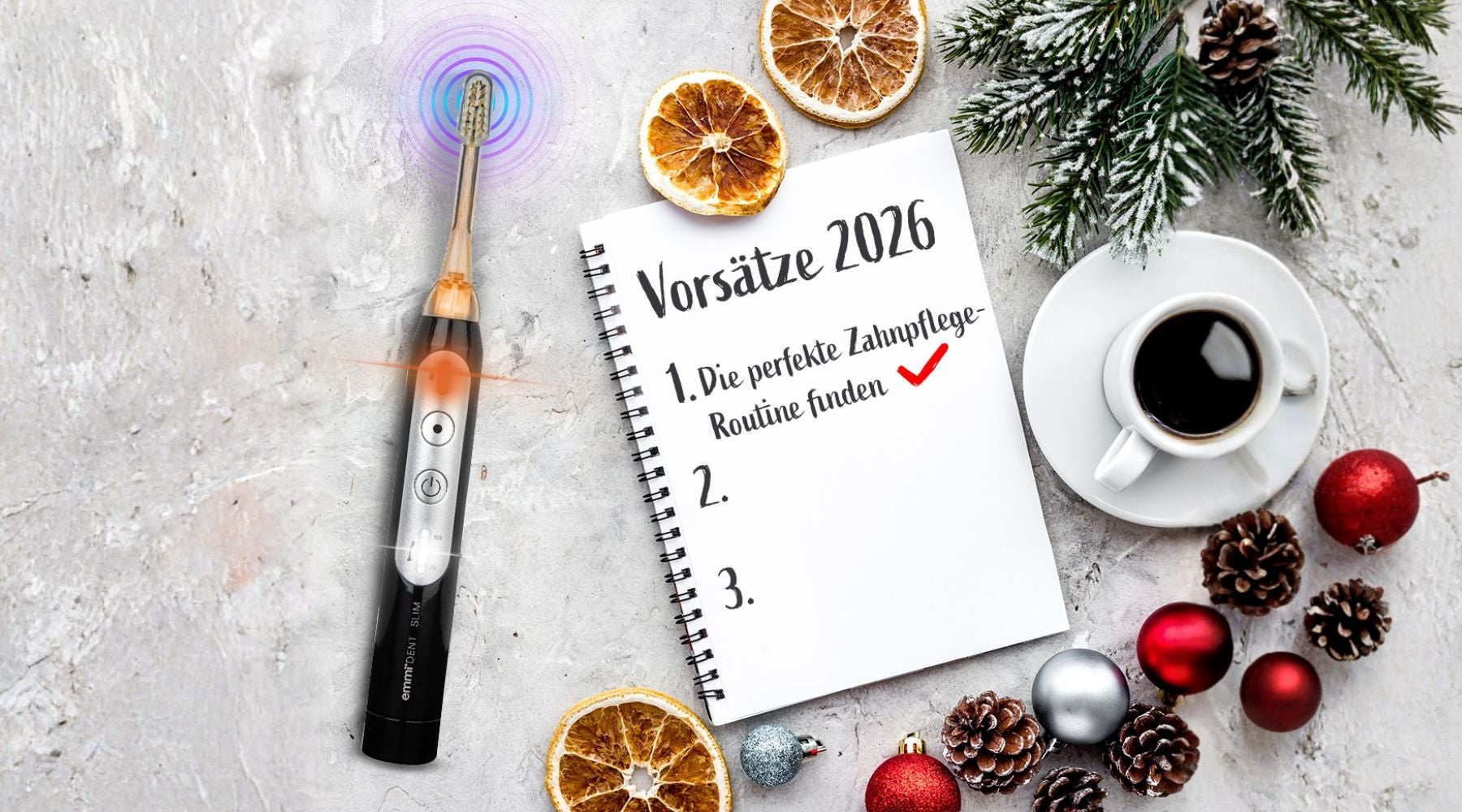
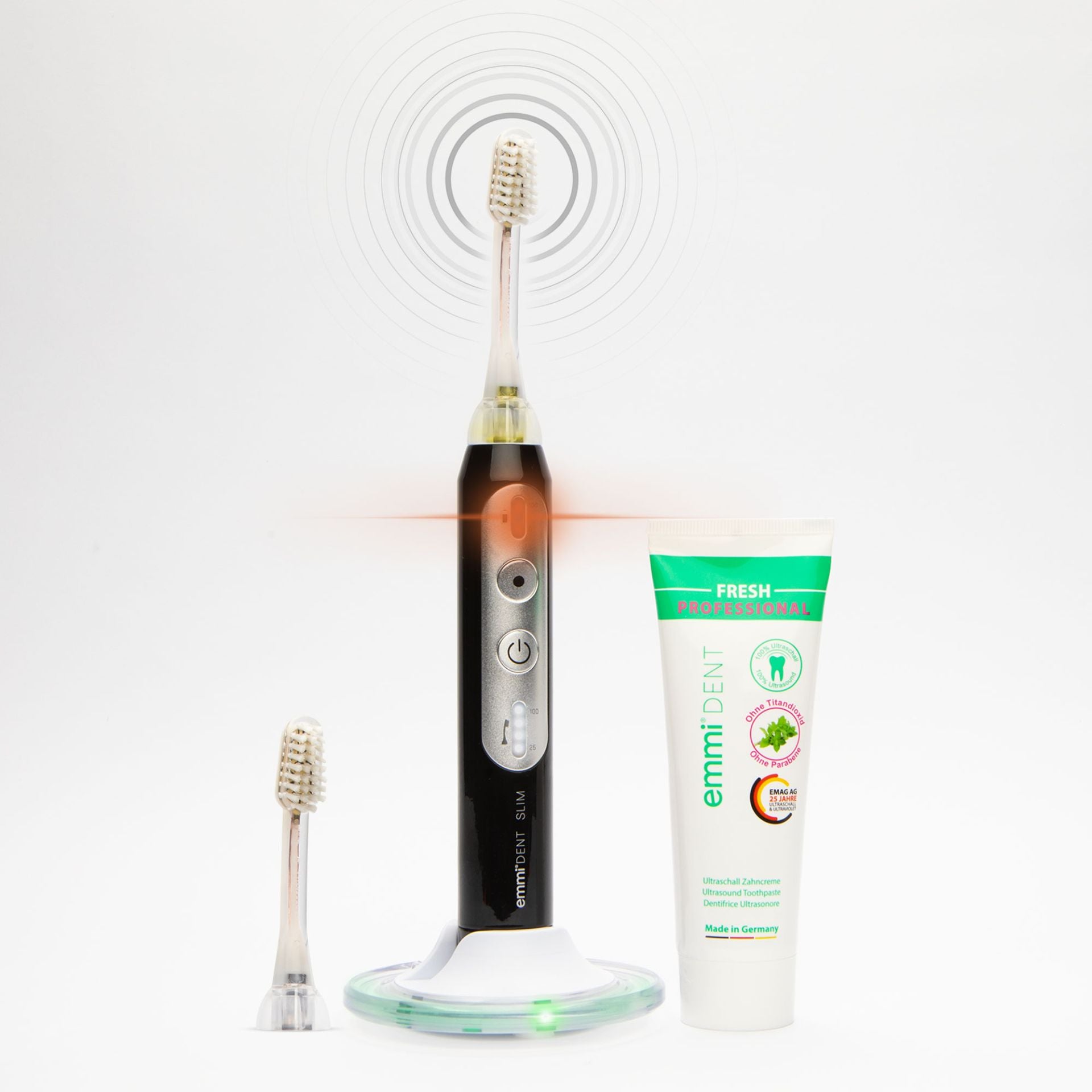
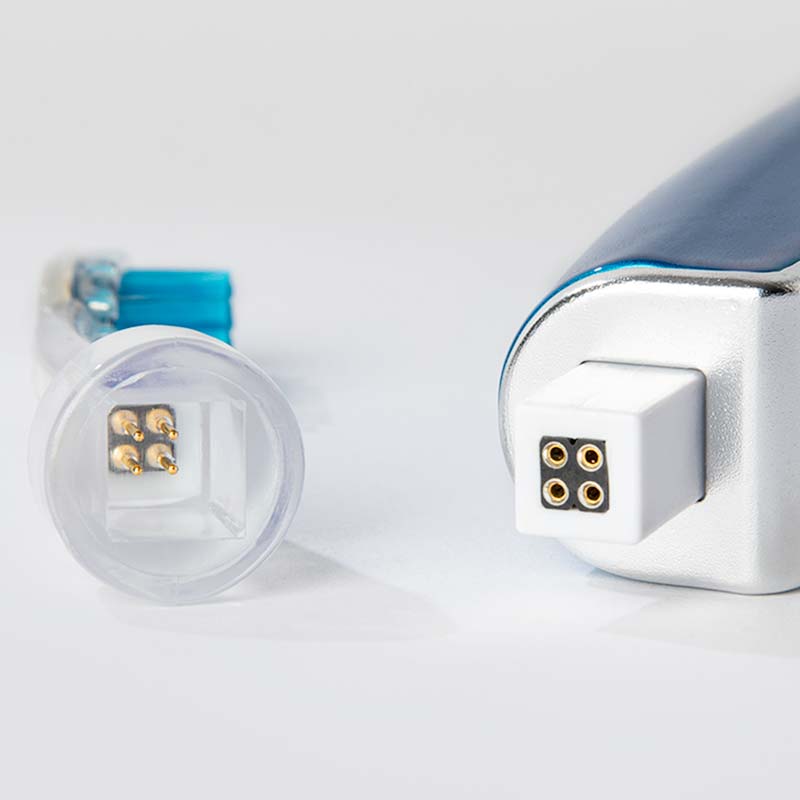
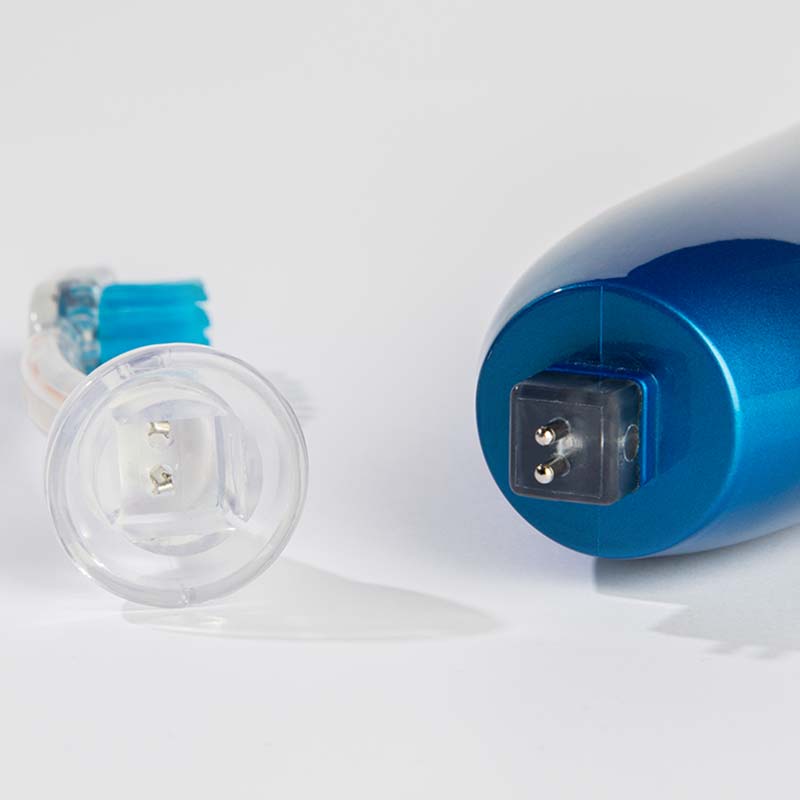
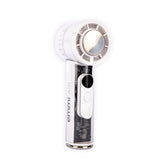
Gentle dental care helps you keep your mouth thoroughly clean without creating new stressors. A calm morning or evening routine can be more than just hygiene. It can become a small moment of self-regulation— a fixed time when you consciously slow down, focus on a few key steps, and signal to your body that it can relax. Our emmi-dent ultrasonic toothbrush perfectly supports you in this.
Especially during a period of significant change, this form of gentle care can have a stabilizing effect.
Ultrasonic dental care as a stress-free solution
Ultrasonic dental care with emmi-dent differs fundamentally from conventional brushing. It works without mechanical brushing movements or pressure. Instead, it uses fine ultrasonic pulses that clean the oral cavity without damaging tooth enamel or gums through friction. The brushing process itself is quiet and virtually silent.
This can be a noticeable advantage, especially for those with stress-related teeth grinding, sensitive tooth necks, or irritated gums. The jaw is not subjected to additional strain, sensitive areas are protected, and cleaning is even, even where conventional toothbrushes often require too much force.
Many people find this form of dental care significantly more pleasant. Especially during periods when the body is already under stress, low-stress care can help relieve pressure on the mouth and make the daily routine more relaxed, because dental care in January should be more than just a chore. Let it become a conscious ritual in the new year.
These small rituals often have a greater impact than it initially appears. They create structure, provide a sense of security, and help to gradually reduce tension. Especially in times of external turmoil, this consistency can have a stabilizing effect.